Monnar

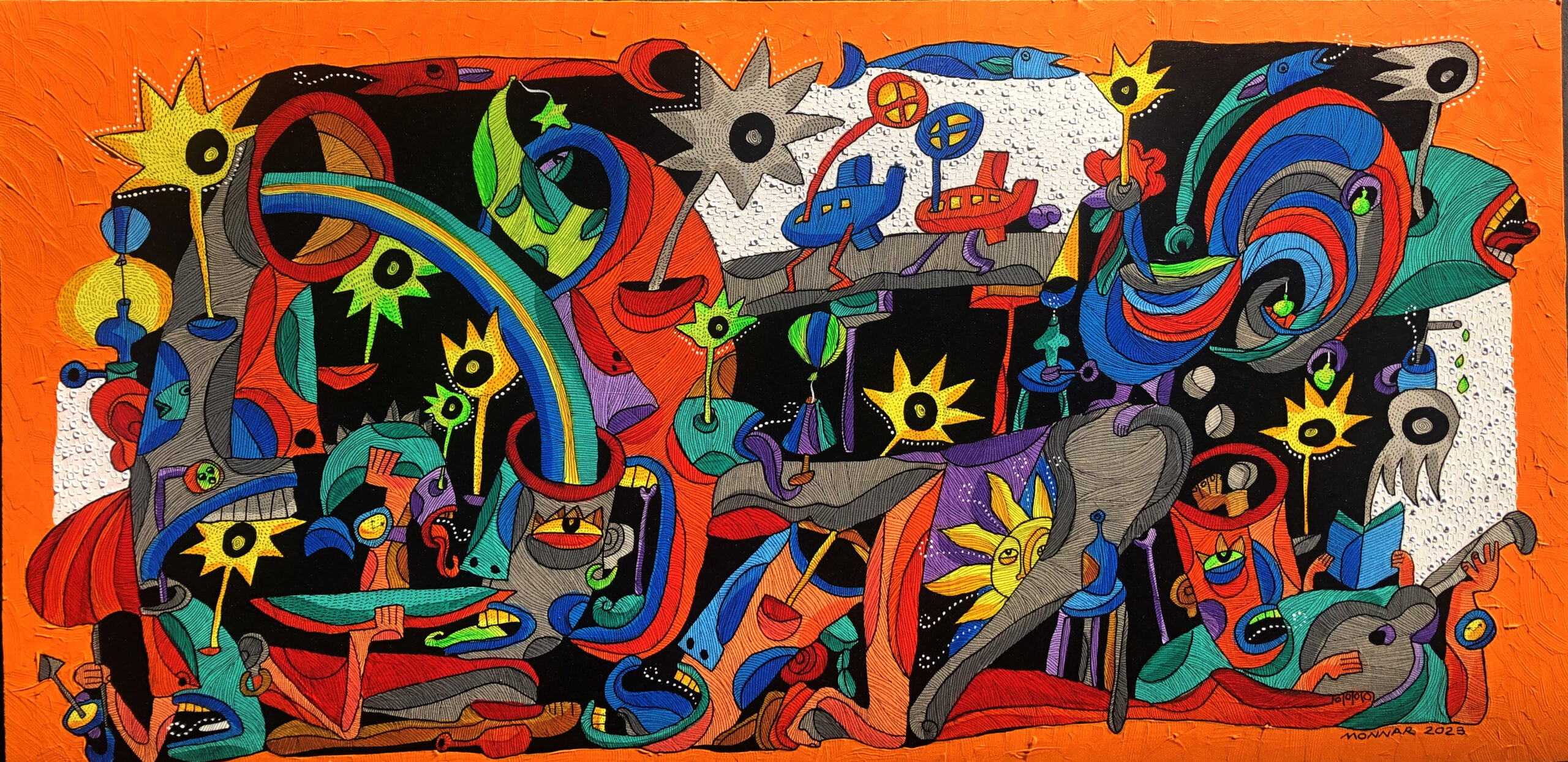
Monnar Baldemor is an adept and prolific artist much like his father Manuel. Quickly amassing a body of work, Monnar’s first exhibition was of pen-and-ink creations that he painstakingly rendered on bright, pastel-colored backgrounds. This penchant for the use of bright hues is probably the only quality Monnar’s paintings shares with the elder Baldemor. Thematically, Monnar often delves in the darker side – social, economic, and political ills that bedevil society. This preoccupation in plumbing the depths of emotion saw Monnar come up with stark images more akin to a meeting of Picasso and Degasperi. The anatomical distortions and abstract forms of this earlier period also call to mind Hieronymus Bosch’s disturbing renderings. Set against the aforementioned pastel hues and backgrounds, the irony is visually arresting.

“Abstractions have long fascinated me. How do we represent the intangible ideas in the tangible painting or artwork – abstractions such as industry, jealousy, intimacy, happiness, despair, family? It’s not like a photograph representing things we can touch and see for ourselves. A painting and what it stands for (even if an idea) is no less real,” Monnar says.

“Awareness is a concept I want to put forth a lot. The open eyes in my paintings represent this, as well as the idea that we should be sensitive to, and aware of, everything – not just physical things. These eyes of consciousness jut out from everywhere in a perpetual eureka moment.

“Still, there are eyes that, even when open, fail to see the truth. Light bulbs, also a recurring object in my creations, are a popular symbol of ideas, resourcefulness, and application of genius or creativity to a problem or issue. Sadly, we have too little of this going on, so we trundle on with daily life unmindful of our role and responsibility for problems – tra1c, ecological crisis, intrigue, apathy. We accept until things become unacceptable. I paint clocks to remind us that time is a nite resource not to be taken lightly or wasted. If my paintings could have a sound, it would be a persistent, distressing ticking of a clock. Tick-tock-tick-tock.

“Still, hope is a gift that we should always welcome. It will remain ripe, ever-ready for the picking. Fruits, with their intrinsic goodness in sweetness and healthfulness, offer the perfect metaphor for grasping the concept of positivity. After all, it’s not too late until it’s too late. The trick is in not waiting to find out just when it is.”

Monnar has earned five Jurors’ Choice nods in the prestigious yearly art tilt of the Artist Association of the Philippines. He was also chosen one of the 50 finalists in the Phillip Morris Group of Companies Philippine Art Awards.
Fernando Antimano

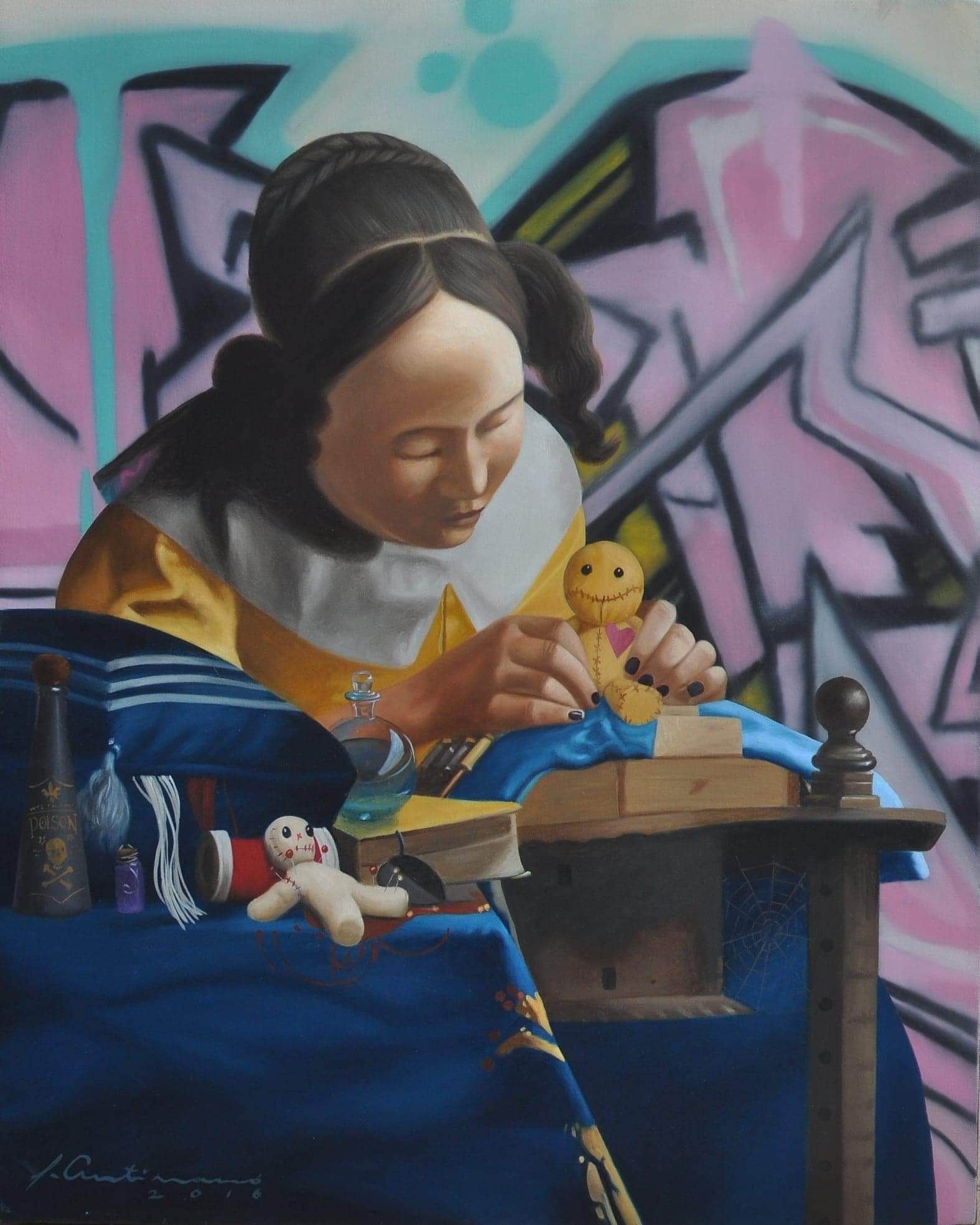
Fernando Antimano is a Post-War and contemporary visual artist whose works have appeared in gallery auctions and exhibitions in the Philippines. His paintings have been offered at auction multiple times, with examples such as Toxic Maker (1994), American Gothic x Cropp (2016), and Rebellious Streak (2015) indicating an active career spanning at least the 1990s through the 2010s. His auction records show realized prices ranging from approximately USD 289 to USD 1,115 depending on the work and format.

He was born in Nagtipunan, Quirino, and has been recognized locally as one of the notable visual artists from Quirino Province.

He was one of the most young talented Filipino artist that uses oil in painting which is rare as per say because of the duration of drying. He was awarded 2nd placer in 45th Shell Nsac (sculpture category) and also became a finalist after that year. His recent recognition was in 2017-2018 became a semi finalist in MADE and again during those years and also took the place of becoming a semi finalist in Philippine art awards and in the same yr “Maningning miclat foundation”.

Antimano’s work engages with a range of thematic content and stylistic approaches, and his style has been described in some social postings as blending realism with surreal or imaginative reinterpretation of familiar subjects—including parodies or conceptual riffs on classic imagery and everyday scenes—although full published critical sources for this characterization are limited.

His participation in art circles and recognition includes roles in regional arts events and creative awards, such as being noted alongside others as a Creative Icons Awardee in Cagayan Valley art programs.

Conneth Amido

Conneth Amido is a contemporary Filipino visual artist known for his vibrant, imaginative works in painting and mixed media. He has participated in numerous group exhibitions and has been featured in solo shows that showcase his distinctive artistic voice. His work often blends playful surrealist elements, buoyant colors, and dreamlike landscapes, inviting viewers to revisit a sense of wonder, optimism, and creative curiosity. His art balances a whimsical sense of joy with thoughtful reflections on aspiration, struggle, and perseverance.

Artistic Style & Themes

  • Amido’s work frequently includes whimsical figures and recurring motifs—like stars—as metaphors for personal goals, ambition, and resilience.
  • His pieces use bold color and playful form to engage audiences and encourage imaginative interpretation.
  • He is often associated with pop-surrealist influences and a light-hearted, accessible approach to serious themes.

Hiro Kiyoshima

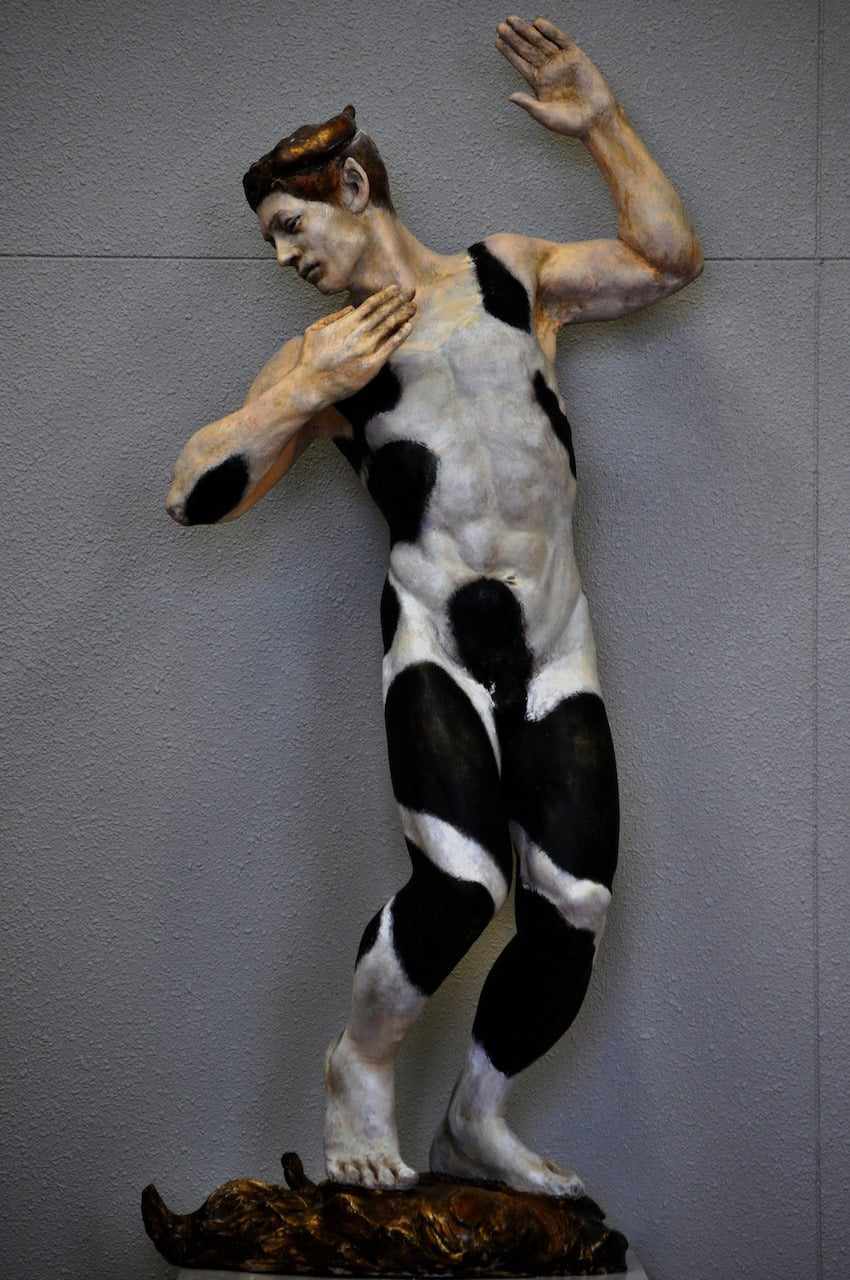
He is a figurative sculptor based in Kumamoto, Japan. He has extensive formal training, including an MFA; and he is an art professor of Sojo University. From this relatively quiet part of the world, from within the nondescript studio building where he works, Hiro creates supremely vivid work. The vitality that radiates from his figures flows from a style that deftly subsumes some of the great masters of both western and Japanese sculpture—easily avoiding the pitfalls of ironic appropriation or homage—while maintaining a perspective that is thoroughly contemporary.
It is passion more than anything that animates Hiro’s work. His obvious technical proficiency and ability to intertwine artistic styles from disparate eras and regions captures the eye of the beholder, but it is the work’s passion that captures all the rest. The visceral, lasting impression produced by his art may be its most distinctive feature.

Hiro composes all of his pieces from clay, then he casts them in either bronze or resin. To the latter he applies acrylic paint. He has embraced sculpture’s essential power as an art form—it’s three-dimensionality and ability to capture mass and movement—as a means for exploring human emotion, or broadly speaking, the “human condition.”

Ping Duran

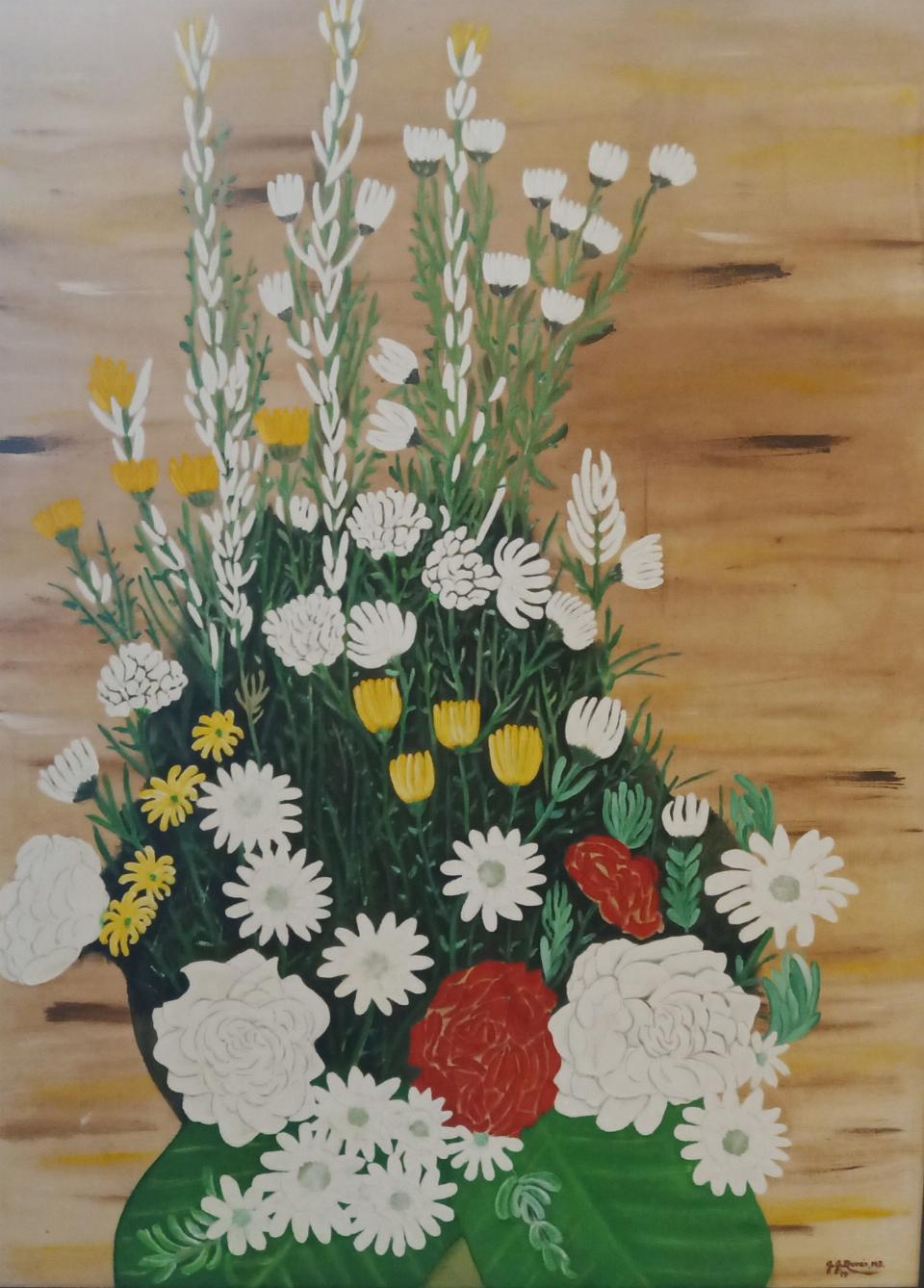
Also known as “Dr. Jose “Ping” Duran Use to head UST opthalmology department. with his eye for the fauna & flora, blossoming naturally with a burst of colors that give cheer to setting of a paradise.As everyone says his works is a soothing nourishments for the human spirit.

Adam Nacianceno

Adam Nacianceno, A Fine Arts graduate from TUP-Manila (Technological University of the Philippines). Nacianceno usually paints woman faces. The face itself is rendered poster-style in the manner of the pop artists, the hair and background adornments and intricate details done in acrylic and brush, evoke memories of the Jugendstil or Art Nouveau. Nacianceno’s paintings, although belonging to the figurative school, also hovers somewhat at the edge of abstraction. His penchant for utilizing Pollock’s drip-and-splatter technique marks him as a quasi-abstract expressionist. But Nacianceno didn’t stop at just depicting the mere physicality of the women’s faces. The titles he gave to his pieces provided the profundity that elevated his paintings to visual poetry, and allowed us the means to decipher for ourselves the meaning hidden in each work. Nacianceno only uses black and white paint because he wants his viewers to feel, not see, the colors suggested by his artworks. And by color, he refers not to the hues literally, but to the emotion, drama and conflict that are part and parcel of really profound works. Nacianceno wants to show that even monochromatic artworks has the power to display the beauty of colors. Having exhibited here and abroad, Nacianceno is one of the most promising artists that the Philippines has in this point in time.

Yes, Nacianceno’s paintings maybe achromatic, but it doesn’t mean that they are colorless.